


From Discovery to Market: The Hidden Value of Improvement Patents
Why existing science and open-source discoveries still hold massive patent potential, and how a focused IP strategy turns "what is" into "what’s possible."
The Discovery Was Just the Beginning. The Innovation Continued for Generations.
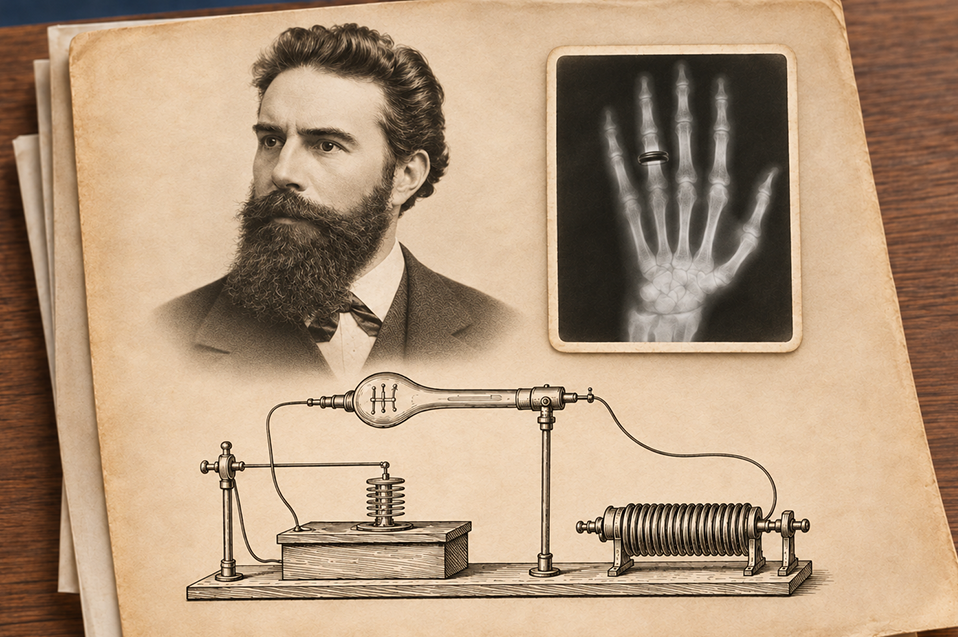
On November 8, 1895, German physicist Wilhelm Conrad Röntgen discovered X-rays, forever changing the world of medicine.
Röntgen chose not to patent the technology, making it freely available for others to develop. But what happened next is just as fascinating.
Over the following decades, inventors and companies developed and patented new technologies built on his discovery, from improved X-ray tubes to advanced medical imaging systems.
How significant was this wave of innovation?
A 2014 study published in World Patent Information identified more than 19,000 patent filings related to X-ray technology by 2013.
And there's an important business lesson here.
You don't have to invent the underlying science to build valuable intellectual property around it. Some of the most commercially significant innovations aren't entirely new breakthroughs. They're smarter applications, technical improvements, or practical solutions built on existing knowledge.
A technology may be widely known. The science may be in the public domain. But the innovative solutions that make it commercially useful may still be patentable.
The question isn't always "What did we discover?"
Sometimes, it's "What have we made possible?"
And that's where a smart patent strategy can make all the difference.